How-to
How to use a hot air brush for a salon-style blow-dry
Published
Note: This page contains affiliate links. If you buy through them we may earn a commission at no extra cost to you. Learn more
In short
Towel-dry and detangle, then rough-dry with a dryer until hair is damp unless your brush is designed for wet hair. Clip hair into sections, start underneath, and draw the brush slowly from root to tip with steady tension, lifting at the root for volume. Turn the brush at the ends for a bend and finish each section with cool air. Check your brush's manual for wet-hair use and heat settings.
Products for this job
Compare all 7 productsDyson Airwrap i.d.: conical barrel near the root
Check price on AmazonAffiliate linkDyson Airsmooth: teardrop brush, 580 g
Check price on AmazonAffiliate linkShark FlexStyle 5-in-1: includes 24 mm curler
Check price on AmazonAffiliate link
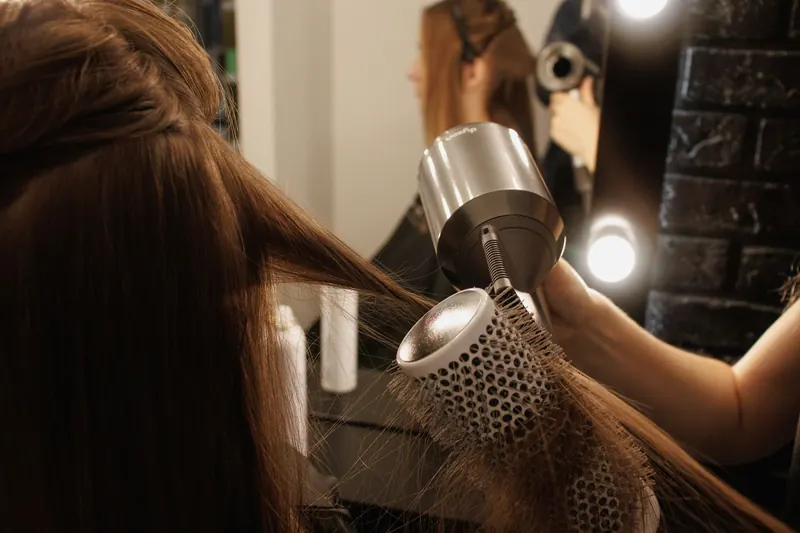
A hot air brush combines a hair dryer and a round or paddle brush. Used well, it gives a smooth blow-dry with body, without juggling a dryer in one hand and a brush in the other. Used badly, it can leave hair frizzy or flat. The difference is mostly technique: how damp the hair is, how big the sections are and how slowly you move. This guide covers each step, plus tips for short hair and for getting lift at the root. Models differ, so check the instructions that came with yours.
Should you rough-dry first?
Most hot air brushes work best on damp hair, not soaking wet hair. If you start too wet, you spend a long time on each section and the result can be less smooth. A quick rough-dry with a normal dryer to about 70 or 80% dry saves time.
Some brushes are designed to go from wet. Dyson markets its Airsmooth for styling from towel-dried hair, and ghd describes its Duet Blowdry as wet to blow-dried. If your brush is one of these, follow the maker's guidance, which may skip the rough-dry stage.
Step by step: the basic blow-dry
Moving slowly is the key. A fast pass smooths the surface but leaves damp hair underneath, which frizzes later.
- 1
Towel-dry hair and detangle with a wide-tooth comb.
- 2
Rough-dry to damp if your brush needs it.
- 3
Divide hair into sections: two at the back, one on each side and one on top. Clip the top layers up.
- 4
Start at the nape with a section no wider than the brush.
- 5
Place the brush under the section at the root and hold for a few seconds.
- 6
Draw it slowly down to the ends, keeping the hair taut.
- 7
At the ends, turn the brush under or out for a bend.
- 8
Repeat until the section is dry, then finish with the cool setting.
- 9
Work up and round the head, finishing with the top and front.
Getting volume at the root
Fine hair benefits most from this. Our guide to dryers for fine hair covers tools that suit it.
- Lift the section straight up from the scalp, not down.
- Hold the brush under the root for a few seconds before moving.
- Use the cool shot at the root to set the lift.
- On the crown, overdirect: lift sections forward and then back.
- A round or oval head gives more lift than a flat paddle.
Hot air brushes on short hair
Short hair is often quicker with a hot air brush than with a dryer and separate brush. Choose a smaller barrel, take thin sections and focus on the roots and the ends. On a bob, turn the ends under for a classic shape. On a pixie cut, brush in the direction you want the hair to lie and finish with cool air.
Multi-stylers such as the Dyson Airwrap and Shark FlexStyle include brush attachments that work in the same way. See multi-stylers for short hair for options.
Keep the brush head clean, too. Hair caught in the bristles and lint in the intake filter both reduce airflow, which means slower drying. Remove trapped hair after each use and clean the filter as the manual recommends.
Common mistakes
If you are not sure whether a hot air brush or straighteners suit your hair, read hot air brush vs straighteners.
| Problem | Likely cause | Fix |
|---|---|---|
| Frizzy finish | Hair left damp, or air pointed up the shaft | Dry fully, point air down |
| Flat roots | Brush pulled down at the root | Lift up and hold at the root |
| Tangles round the brush | Sections too large, or brush rolled | Use smaller sections, glide rather than wind |
| Style drops quickly | No cool setting at the end | Finish each section with cool air |
Note:A hot air brush is a mains appliance. Use it with dry hands, away from water, keep the air intake clear and unplug it before cleaning. Let it cool on a heat-resistant surface before storing.
Frequently asked questions
Can you use a hot air brush on wet hair? Some are designed for it; many work better on damp hair. Check the manual for your model.
How long does a hot air brush blow-dry take? It depends on length and thickness. Rough-drying first usually shortens it.
Do I need heat protection? Follow your stylist's and the product maker's advice. The brush maker's manual may also recommend products.
Can I use a hot air brush every day? Many are designed for regular use with heat control. Use the lowest heat that works for your hair.
What you need
- Check price on AmazonAffiliate link
Dyson Airwrap i.d.: app-led curls, 6 attachments
- Check price on AmazonAffiliate link
Dyson Airwrap Co-anda2x: Gen2 motor, 6 attachments
- Check price on AmazonAffiliate link
Dyson Supersonic Nural: 60°C step and gentle air